
The idea that you finish school, get qualified, and then work until retirement has been fading for years. But now there's hard data to back up what many of us already suspected: the era of learning once and working forever is over.
The 2024 Human Progress Report surveyed over 17,000 people across 17 countries, and the findings are striking. 88% of respondents said continuous learning is crucial for success in today's world. Not helpful. Not a nice-to-have. Crucial.
So why is upskilling important — and what should you actually do about it?
The Numbers Behind the Shift
The Human Progress Report didn't just ask people whether learning matters. It asked them to look ahead.
75% of respondents believe that practical certificates — including those from bootcamps and short courses — will be as valuable as traditional degrees by 2035. That's not a fringe opinion from a handful of tech enthusiasts. That's three-quarters of a global, 17-country sample predicting a fundamental shift in how we value qualifications.
This aligns with what employers are already telling us. The World Economic Forum's Future of Jobs Report estimates that 44% of workers' core skills will be disrupted in the next five years.
The skills you have today won't be the skills you need in 2030 — and waiting for that gap to become a crisis isn't a strategy.
For individuals, this means upskilling isn't something you do once when you're between jobs. It's something you build into your career as an ongoing practice. For employers, it means investing in workforce development isn't just a retention tool — it's a competitive necessity.
Why Upskilling Matters More Now Than Ever
Three forces are converging to make continuous professional development essential rather than optional.
Technology is changing faster than formal education can keep up
By the time a three-year degree curriculum is designed, approved, and delivered, the technology landscape has already moved on. AI tools that didn't exist 18 months ago are now embedded in marketing teams, development workflows, and business operations across every sector. University courses can't pivot that quickly. Shorter, more focused training can.
The half-life of skills is shrinking
Research from IBM suggests that the average shelf life of a technical skill is now around two and a half years, down from roughly ten years in the 1980s. That's not just a technology problem — it affects project management methodologies, marketing strategies, data analysis techniques, and leadership approaches too.
If you learned digital marketing five years ago, the landscape has fundamentally changed. If you learned software development a decade ago, entire frameworks have risen and fallen since then. Staying relevant means treating learning as maintenance, not a one-off event.
Employers are rethinking what qualifications mean
The Human Progress Report's finding about bootcamp certificates reflects a broader shift that's already happening in hiring. Companies like Google, IBM, and Accenture have removed degree requirements from many of their roles. What matters is whether you can demonstrate practical ability — not where or how long you studied.
This is good news for career changers and people who didn't follow the traditional academic route. But it also raises the bar for everyone: if qualifications alone won't differentiate you, your ability to learn, adapt, and apply new skills will.
Upskilling vs Reskilling: What's the Difference?
These terms get used interchangeably, but they mean different things — and the distinction matters for planning your next move.
Upskilling means deepening or expanding the skills you already have. A marketer learning AI-powered analytics tools. A developer adding cloud deployment to their existing coding skills. A manager learning to lead digital transformation projects. You're building on your foundation, not starting over.
Reskilling means learning fundamentally new skills to move into a different role or sector. A teacher retraining as a software developer. A retail manager pivoting into digital marketing. A finance professional moving into data analysis. The starting point is different, but the destination is the same: practical, current, employable skills.
Both are valid responses to a changing job market. The Human Progress Report suggests that most people will need elements of both throughout their careers — and that the most successful professionals are those who treat learning as a continuous activity rather than a response to redundancy.
How People Are Actually Upskilling in 2026
The report highlights a clear trend away from long-form academic education toward shorter, more targeted learning. Here's what that looks like in practice.
Skills bootcamps
Intensive, structured programmes that take you from beginner to competent in weeks rather than years. Bootcamps work because they compress learning into focused periods with clear outcomes — you finish with practical skills and portfolio evidence, not just theoretical knowledge.
At Tech Educators, our bootcamps cover software development, digital marketing with AI, and AI literacy. Each one is designed for working professionals who need results without stepping away from their careers for three years. Funded places are available in several UK regions, which directly addresses the financial barriers the Human Progress Report identifies as a major obstacle to learning.
Hackathons and collaborative learning events
Events like HackEd Norwich — our education-led hackathon bringing together 120 students for three days of hands-on, team-based problem solving — demonstrate a different model of skills development entirely. Participants don't just learn techniques; they practice applying them under real constraints with real collaborators. Employers value this kind of experience because it mirrors how technology work actually happens in professional settings.
Micro-credentials and certificates
Short courses focused on specific, in-demand skills. These stack over time — you might take an AI literacy course this year, add digital marketing next year, and pick up data analysis the year after. Each credential is useful on its own, but together they build a portfolio of current, verified capabilities.
Self-directed learning
Free resources from platforms like freeCodeCamp, Google Digital Garage, and HubSpot Academy provide a starting point. The challenge with self-study is maintaining momentum without structure or accountability — which is why many people start self-teaching but eventually move to a structured programme to make real progress.
What This Means for Your Career
If 88% of a 17,000-person global sample says continuous learning is crucial, the question isn't whether to upskill. It's how.
If you're employed and want to stay competitive, talk to your employer about professional development support. Many organisations have training budgets that go unspent. Our AI Literacy Bootcamp runs at half a day per week over 16 weeks — designed specifically so you can upskill alongside your current role.
If you're considering a career change, the data is encouraging. The shift toward valuing practical certificates over traditional degrees means you don't need to go back to university. A 12-week coding bootcamp or 13-week digital marketing programme can get you into a new industry faster and more affordably than any degree. Hear how one of our graduates made that transition — from freelance designer to professional developer through an intensive bootcamp.
If you're a business leader, investing in your team's skills development isn't just good for retention — it's a strategic advantage. The organisations that adapt fastest are those with workforces that can learn continuously. Our Leadership & Management: Digital Transformation Bootcamp is built specifically for leaders who need to drive AI adoption and innovation without becoming technical specialists themselves.
The Bottom Line
The 2024 Human Progress Report confirms what the most forward-thinking professionals and employers have already recognised: the future belongs to lifelong learners. The traditional model of front-loading education at the start of your career is giving way to something more dynamic — shorter bursts of targeted, practical learning throughout your working life.
The good news is that getting started has never been more accessible. Whether you're looking to deepen existing skills or pivot into something new, there are practical, affordable routes available right now.
Explore our bootcamp courses to find the right starting point, or speak to our team to find out whether funded places are available in your area.
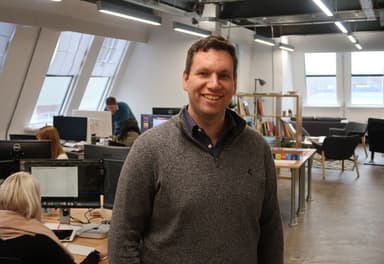
James Adams
James has 8 years with Fortune 200 US firm ITW, experience of managing projects in China, USA, and throughout Europe. James has worked with companies such as Tesco, Vauxhall, ITW, Serco, McDonalds. James has experience in supporting start-up and scale up companies such as Readingmate, Gorilla Juice and Harvest London. James completed his MBA at the University of East Anglia in 2018.