
AI in marketing isn't a future trend — it's the present reality. Every major marketing platform has integrated AI capabilities, every agency is experimenting with AI workflows, and every marketing team is trying to figure out where these tools genuinely help and where they create problems.
The shift has been rapid. The global AI in marketing market is projected to exceed $200 billion by 2033, according to Market.us research, growing at roughly 27% year on year. But the raw numbers matter less than what's actually changing on the ground — how real marketing teams are using AI, where they're getting it wrong, and what skills you need to stay relevant.
How AI Is Actually Being Used in Marketing
Forget the hype about AI replacing marketers. The reality is more nuanced — and more interesting. AI is augmenting marketing work in specific, practical ways.
Content Creation and Editing
AI writing tools can produce first drafts, generate headlines, create social media copy, and suggest content angles in seconds. But the quality gap between AI-generated content and human-crafted content is exactly where skill comes in.
The marketers getting the most from AI aren't using it to replace their writing. They're using it to accelerate their process — generating rough drafts that they then reshape with their brand voice, industry knowledge, and audience understanding. The output is faster and often better than either human or AI alone.
The mistake many teams make is treating AI-generated content as finished. Search engines are increasingly sophisticated at identifying thin, generic AI content. Readers can feel it too. AI is a starting point, not an endpoint.
SEO and Content Strategy
AI tools can analyse search data, identify keyword opportunities, and suggest content structures faster than any human researcher. Platforms like Semrush, Ahrefs, and Clearscope use AI to provide competitive analysis, content gap identification, and optimisation recommendations.
For UK businesses competing for search visibility, AI-powered SEO tools have levelled the playing field. A small business with the right tools and knowledge can now produce content that competes with much larger organisations — if they understand how to use the insights rather than just following them blindly.
Personalisation at Scale
This is where AI creates the most measurable marketing value. AI algorithms can segment audiences, predict behaviour, recommend products, and personalise email content based on individual user patterns — all at a scale that would be impossible manually.
Email marketing platforms like Mailchimp, Klaviyo, and HubSpot use AI to optimise send times, subject lines, and content blocks for different audience segments. E-commerce platforms use AI recommendation engines to suggest products based on browsing history and purchase patterns.
The challenge isn't the technology — it's having clean data and a clear strategy for what you're personalising and why.
Paid Media and Advertising
Google Ads and Meta's advertising platforms have built AI into their core targeting and bidding systems. Performance Max campaigns, broad match keywords with smart bidding, and advantage+ shopping campaigns all rely on AI to optimise ad delivery in real time.
For marketers, this means the skill has shifted from manual bid management to strategic oversight — setting the right objectives, providing quality creative assets, and interpreting results to guide the AI effectively.
Analytics and Reporting
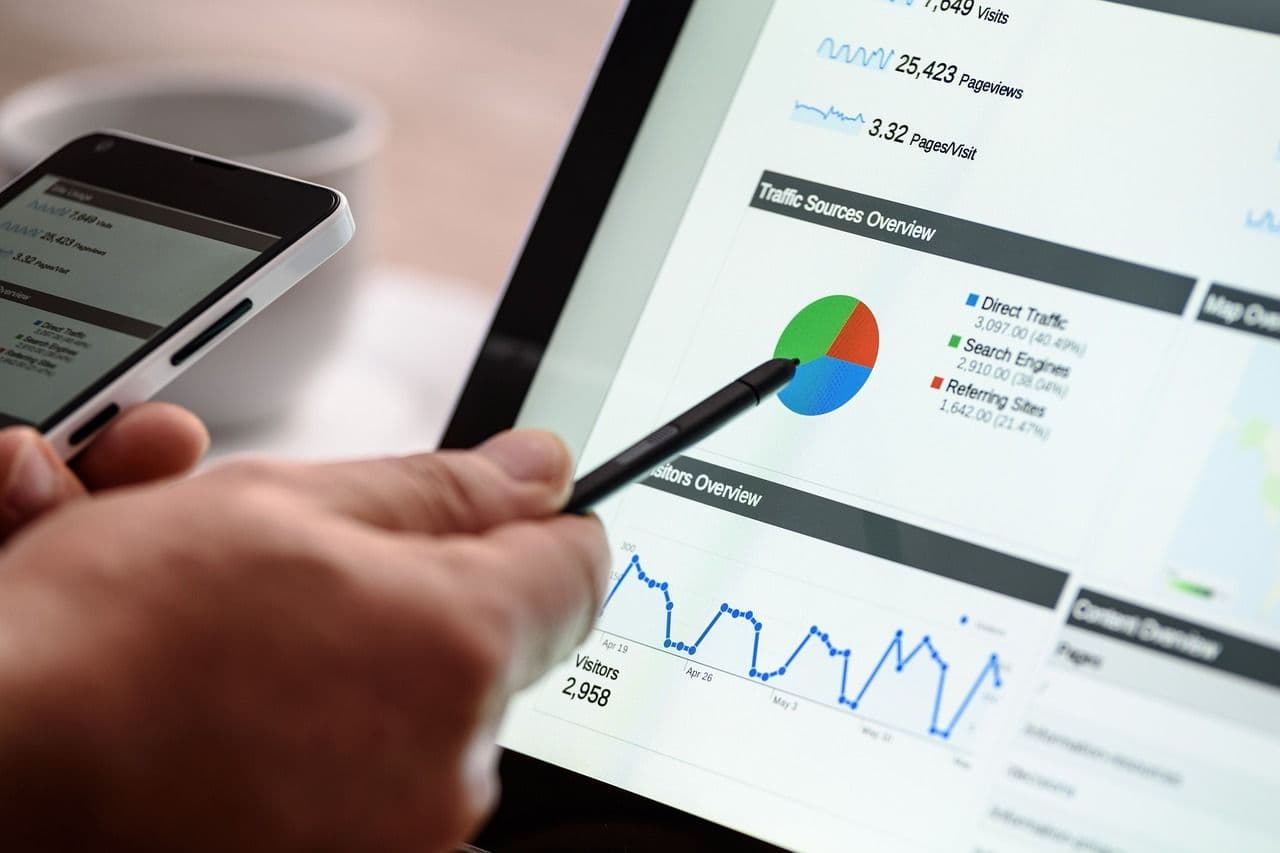
AI can process large datasets and surface patterns that would take a human analyst hours or days to identify. Marketing attribution, customer journey analysis, and predictive analytics are all areas where AI tools provide genuine competitive advantage.
Google Analytics 4 uses machine learning to identify trends, predict churn risk, and flag unusual traffic patterns. For businesses generating significant data, AI-powered analytics can reveal opportunities that would otherwise go unnoticed.
Where AI Falls Short in Marketing
Not everything benefits from an AI approach. Being honest about limitations is what separates effective AI adoption from expensive mistakes.
Brand voice and creative direction. AI can mimic a brand voice if given enough examples, but it can't originate one. Strategic brand decisions — positioning, messaging architecture, creative campaigns — still require human judgment and creative thinking.
Relationship building. Marketing at its core is about understanding people. Client relationships, community management, and brand trust are built through genuine human connection. AI can support these efforts (by handling routine queries or suggesting responses) but can't replace the authenticity that builds loyalty.
Ethical judgment. AI doesn't understand context the way humans do. It can't assess whether a piece of content might be insensitive, whether a targeting strategy crosses ethical lines, or whether a data practice violates privacy expectations. Human oversight isn't optional — it's essential.
Strategy. AI is excellent at optimising within defined parameters. It's poor at questioning whether those parameters are right in the first place. Marketing strategy — deciding what to do and why — remains a fundamentally human skill.
The Skills Gap: What UK Marketers Need to Learn
Here's the pattern we see repeatedly: marketing teams adopt AI tools but don't invest in AI skills. The tools sit underused, outputs are mediocre, and the promised efficiency gains don't materialise.
Effective AI-assisted marketing requires a specific skill set that most marketers don't yet have:
Prompt engineering — knowing how to ask AI the right questions to get useful outputs. The difference between a vague prompt and a well-structured one can be the difference between generic filler and genuinely useful content.
Critical evaluation — being able to assess AI output for accuracy, brand alignment, and quality. This requires deeper marketing knowledge, not less. You need to know what good looks like before you can judge whether AI is producing it.
Data literacy — understanding what data AI tools are using, how to provide better data, and how to interpret AI-driven insights. Marketers who can work confidently with data have a significant advantage.
Ethical AI use — understanding bias, privacy implications, and responsible deployment. The UK's AI Safety Institute has made it clear that responsible AI adoption requires informed users.
Strategic integration — knowing when to use AI, when not to, and how to integrate AI tools into existing workflows without disrupting what already works.
Building AI Marketing Skills
If you're a marketer looking to build these capabilities, structured training makes a meaningful difference. Self-teaching with YouTube tutorials and blog posts can help, but it's difficult to build a coherent skill set without guidance.
Our Digital Marketing with AI Bootcamp was designed for exactly this transition. It's a 13-week part-time course (one day per week) covering digital marketing fundamentals — SEO, content strategy, paid media, analytics, social media — with AI tools integrated throughout. The approach isn't about replacing marketing skills with AI. It's about amplifying them.
Funded places are available in Hull, Slough/Berkshire, Cumbria, and Lincoln, covering the full £5,000 course fee.
If AI literacy is the priority rather than marketing-specific skills, the AI Literacy Bootcamp provides a broader foundation at Level 3 — covering how AI works, effective prompting, ethical considerations, and practical applications across business functions. Funded places are available in Hull, Lincoln, Norwich, and Ipswich.
For leaders trying to develop AI strategy across their organisation, the Leadership & Management: Digital Transformation Bootcamp covers innovation models, AI policy development, and driving adoption at Level 5.
What Comes Next for AI in Marketing
The technology will keep advancing. AI-generated video, voice synthesis, and multimodal content creation are all maturing rapidly. Marketing automation will become more sophisticated, and personalisation will become more granular.
But the fundamentals won't change. Marketing is still about understanding your audience, communicating value, and building trust. AI changes how you do those things — it doesn't change that you need to do them.
The marketers who thrive will be the ones who understand both the technology and the craft. If you're ready to build that combination, explore our courses or get in touch to discuss which training path fits your goals.

James Adams
James has 8 years with Fortune 200 US firm ITW, experience of managing projects in China, USA, and throughout Europe. James has worked with companies such as Tesco, Vauxhall, ITW, Serco, McDonalds. James has experience in supporting start-up and scale up companies such as Readingmate, Gorilla Juice and Harvest London. James completed his MBA at the University of East Anglia in 2018.