
The internet has made it possible to learn almost anything for free. So why would anyone pay for an instructor-led coding bootcamp when YouTube tutorials, freeCodeCamp, and The Odin Project exist?
It's a fair question. And the answer isn't that paid training is always better — it's that the two approaches serve different needs, and understanding the difference can save you months of wasted effort.
The Self-Taught Route: Honest Pros and Cons
Self-study works for some people. The ones who succeed typically share three traits: they're highly self-motivated, they have consistent time available, and they don't need structure to stay accountable.
What works well: you control the pace entirely. You can spend three weeks on a concept that confuses you and skip past things you already understand. The cost is zero (or close to it), and you can fit learning around any schedule.
Where it falls apart: most self-taught learners hit a wall somewhere between month two and month four. The initial excitement fades, tutorials start feeling repetitive, and the gap between "following a guide" and "building something from scratch" feels enormous. Without anyone to ask for help, debugging a single error can eat an entire evening — and the temptation to move on to something easier is always there.
Industry data suggests that self-taught coding courses have completion rates below 15%. That doesn't mean the content is bad — it means that learning a complex skill without support, structure, and accountability is genuinely difficult for most people.
The Instructor-Led Route: What Changes
An instructor-led bootcamp adds three things that self-study can't replicate.
Real-time feedback
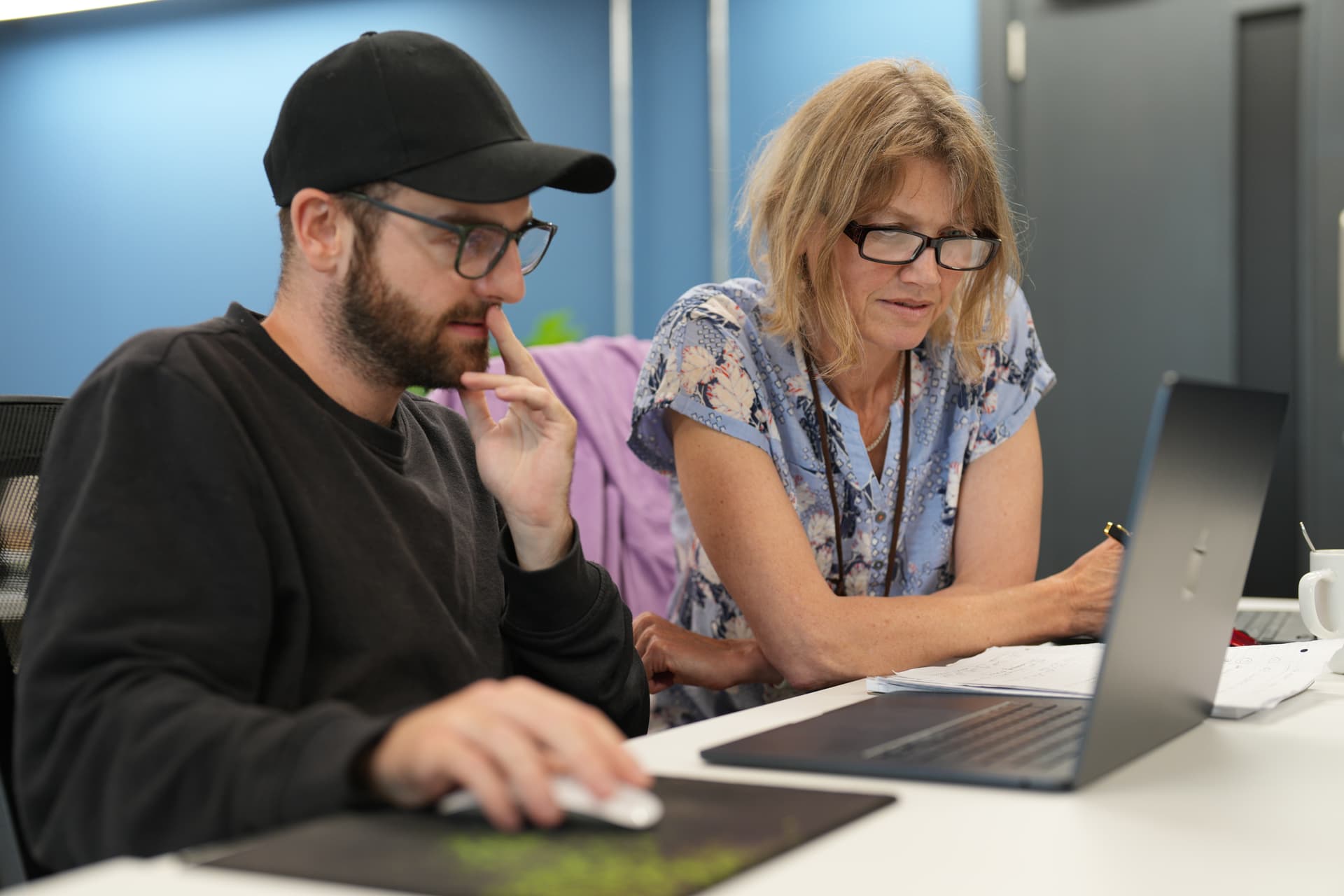
When you write code that doesn't work, an instructor can look at your screen and identify the problem in seconds. What might take you two hours to debug alone takes five minutes with someone experienced. That's not just faster — it's less demoralising. The frustration of unsupported debugging is one of the main reasons self-taught learners give up.
A structured curriculum
Free resources give you the building blocks, but they don't always give you a clear path through them. An instructor-led programme sequences concepts in the right order, builds each week on the previous one, and ensures you don't skip fundamentals that will trip you up later.
At Tech Educators, our Software Development Bootcamp follows a carefully designed progression from HTML and CSS through JavaScript, React, Node.js, databases, and deployment. Each module builds on the last — you're never dropped into a concept without the foundation to understand it.
Peer learning
You might be surprised how much you learn from the person sitting next to you. Bootcamp cohorts create a community of people at the same stage — struggling with the same problems, celebrating the same breakthroughs, and holding each other accountable. Graduates consistently tell us that the cohort experience was one of the most valuable parts of the programme.
Amie-Leigh Minshull, who joined our Digital Marketing with AI bootcamp, described moving from freelance isolation to a collaborative learning environment as one of the most transformative aspects of the experience.
When Self-Study Is the Better Choice
Self-study is the right starting point if you're not yet sure coding is for you. Spending two weeks on freeCodeCamp costs nothing and gives you a genuine feel for whether you enjoy the process of writing code.
It's also a good option if you're already working in tech and want to add a specific skill — say, learning React when you already know HTML, CSS, and JavaScript well. In that case, you have the foundations and just need the new knowledge.
Where self-study becomes risky is when it's your primary route to a career change. If your goal is to get hired as a developer, the combination of skills training, portfolio development, and career support that an instructor-led programme provides is difficult to replicate on your own.
When an Instructor-Led Programme Makes More Sense
If any of these apply to you, an instructor-led bootcamp is probably the faster, more reliable path.
You're changing career and need to be job-ready in months, not years. You've tried self-study before and lost momentum. You learn better with structure, deadlines, and direct support. You want career coaching, CV help, and employer introductions alongside technical training. You want funded options — government-backed Skills Bootcamp funding can cover the full cost in several UK regions.
The Hybrid Approach
The best outcomes often come from combining both. Start with self-study to build confidence and confirm your interest. Then join an instructor-led programme to accelerate your learning, fill gaps, and access career support.
Many of our most successful graduates, including Fee Kempton and Drew Collins, had done some self-directed learning before joining the bootcamp. That foundation meant they could focus on deeper concepts during the programme rather than starting from absolute zero.
Find the Right Fit
If you're weighing up your options, speak to our team. We'll help you figure out whether an instructor-led bootcamp, self-study, or a combination of both is the right approach for where you are right now.

James Adams
James has 8 years with Fortune 200 US firm ITW, experience of managing projects in China, USA, and throughout Europe. James has worked with companies such as Tesco, Vauxhall, ITW, Serco, McDonalds. James has experience in supporting start-up and scale up companies such as Readingmate, Gorilla Juice and Harvest London. James completed his MBA at the University of East Anglia in 2018.