Most digital marketing courses teach you the theory. You learn what SEO stands for, why email open rates matter, and how to read a Google Analytics dashboard. Then you finish the course, open a blank screen, and realise you have no idea how to actually run a campaign for a real business.
That gap between knowing the terms and doing the work is where most courses fail — and it is exactly the problem a digital marketing bootcamp is designed to solve.
What Is a Digital Marketing Bootcamp?
A digital marketing bootcamp is an intensive, short-term training programme that focuses on practical marketing skills rather than academic theory. Unlike a university degree (which typically takes three years and costs £27,000+) or a free online certificate (which takes a few hours and teaches you to pass a quiz), a bootcamp puts you through weeks of hands-on project work with real deliverables.
The format varies, but most bootcamps in the UK run between 8 and 16 weeks. Some are full-time, others part-time — designed for people who are already working and cannot take three months out of their career. You will typically cover the core disciplines of digital marketing (SEO, paid media, social media, email, content strategy, analytics) and finish with a portfolio of real work rather than just a certificate.
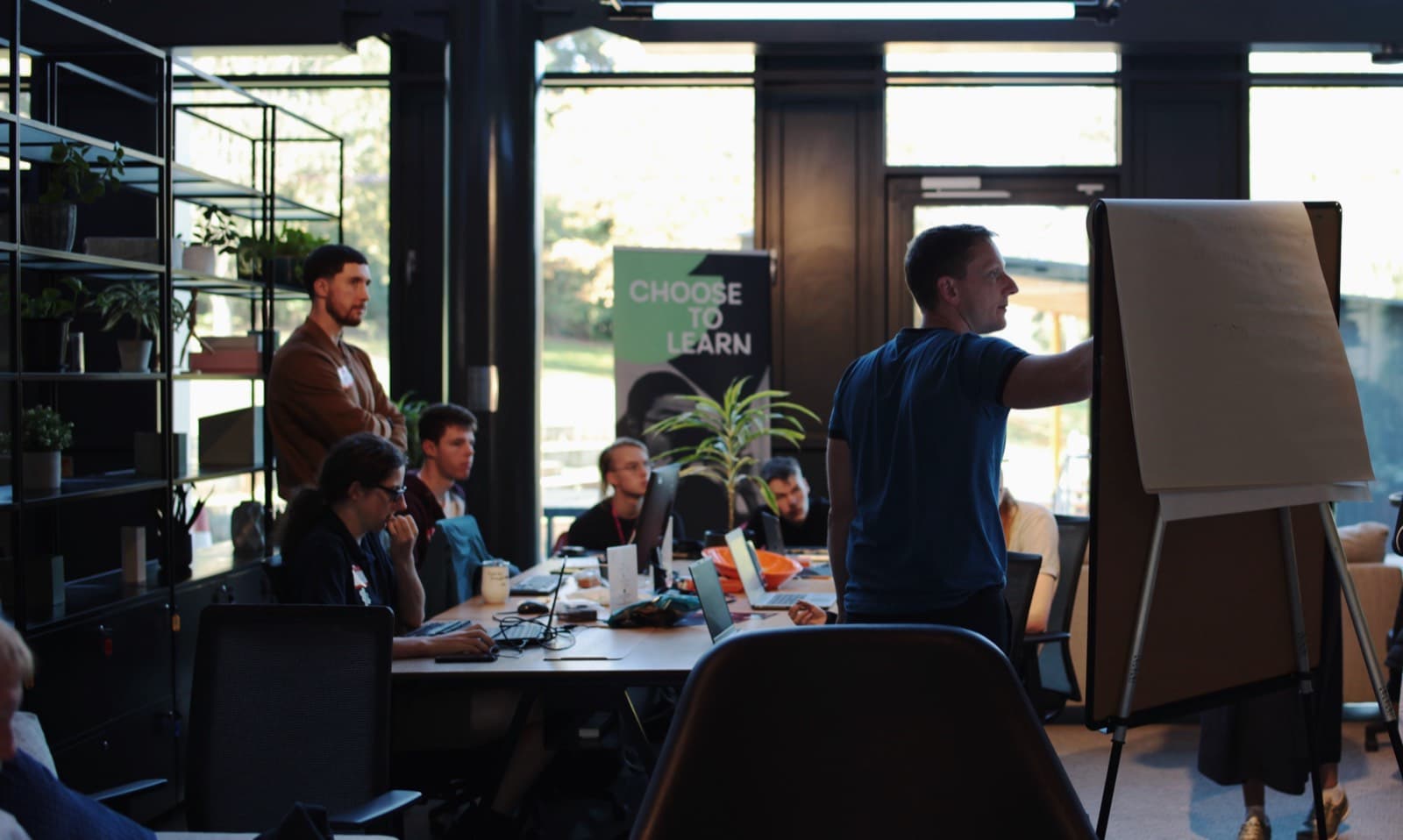
The key difference from self-study or free courses is accountability. You are working alongside other learners, with deadlines, feedback from instructors, and projects that force you to apply what you have learned immediately.
What Will You Actually Learn?
This is the question that matters more than course length, price, or provider reputation. A good digital marketing bootcamp should cover these core areas:
Strategy and planning. Before you touch a single tool, you need to understand how digital marketing fits into a business. That means audience research, buyer personas, channel selection, and campaign planning. If a course jumps straight to "how to set up a Facebook ad" without covering strategy first, it is teaching tactics without context.
Search engine optimisation (SEO). How search engines work, keyword research, on-page optimisation, technical SEO basics, and content strategy. SEO is one of the highest-demand skills in marketing because every business with a website needs it — and most do it badly.
Paid media. Google Ads, social media advertising, budget management, and campaign optimisation. The ability to run profitable paid campaigns is one of the most directly employable skills in digital marketing.
Social media marketing. Content planning, platform strategy, community management, and analytics. Not just "post three times a week" — but understanding why certain content works, how algorithms distribute it, and how to measure what matters.
Email marketing. List building, segmentation, automation, copywriting, and deliverability. Email remains the highest-ROI channel in digital marketing, and knowing how to use it well sets you apart from candidates who only know social media.
Analytics and measurement. Google Analytics, attribution modelling, conversion tracking, and reporting. Every other skill on this list is only useful if you can measure whether it is working.
Where AI Changes Everything
Here is what separates a digital marketing bootcamp in 2026 from one that ran three years ago: AI is no longer optional.
If you are learning digital marketing without learning how to use AI tools effectively, you are training for a version of the job that no longer exists. Employers now expect marketers to use AI for content drafting, audience analysis, campaign optimisation, and data interpretation. The question is not whether to use AI — it is how to use it well and ethically.
Tech Educators' Digital Marketing with AI Bootcamp was built around this shift. The 13-week part-time programme integrates AI throughout the curriculum rather than bolting it on as an afterthought. You learn prompt engineering for marketing content, how to use AI editing tools without losing your brand voice, and the ethical boundaries around AI-generated material.
As Tech Educators CEO James Adams puts it: "We always look at course creation through two lenses. First, can we bring bleeding and leading-edge technologies into the course? If we cannot do that, we are not being true to what we are as a provider. Second, is there a market to disrupt — something about skills delivery that is not hitting the mark?"
That approach means the course does not just teach you to use ChatGPT for blog posts. It teaches you to think critically about when AI helps, when it hurts, and how to build a workflow that makes you faster without making you generic.
How Long Does a Digital Marketing Bootcamp Take?
Most UK digital marketing bootcamps range from 8 to 16 weeks, depending on whether they run full-time or part-time.
Full-time bootcamps (typically 8-12 weeks) suit people who can dedicate their working week to learning. They are intense — expect 30-40 hours per week — but they get you job-ready fastest.
Part-time bootcamps (typically 10-16 weeks) are designed for people already in work. Tech Educators' Digital Marketing with AI course, for example, runs one day per week over 13 weeks. That means you can keep earning while you train, and you can apply what you learn in your current role immediately.
The honest truth about duration: a shorter course is not necessarily better. What matters is whether the programme gives you enough time to build real skills through project work. A 4-week "intensive" that rushes through every topic will leave you with surface knowledge. A 13-week programme with weekly projects gives you time to practice, fail, iterate, and actually retain what you have learned.
How Much Does a Digital Marketing Bootcamp Cost?
Costs vary significantly across the UK market:
Free certificates (Google Digital Garage, HubSpot Academy) cost nothing but teach theory only. They are a good starting point for complete beginners who want to test their interest, but they will not make you job-ready.
Online bootcamps from international providers typically charge £3,000-£7,000. Quality varies enormously. Check whether they offer UK-specific content — marketing in the UK has different regulations, platforms, and consumer behaviours than in the US.
UK-based bootcamps like Tech Educators charge around £5,000 for a Level 4 qualification with instructor-led sessions, real projects, and career support. Payment plans and scholarships are usually available.
University courses range from £9,000+ per year for a degree to £2,000-£5,000 for a short course or certificate. The depth is greater but so is the time commitment.
Getting Your Digital Marketing Bootcamp Funded
Here is where it gets interesting. If you are based in certain parts of the UK, you may not need to pay full price — or anything at all.
The Department for Education funds Skills Bootcamps through local councils and combined authorities across England. These are fully or partially funded training programmes designed to help adults gain in-demand skills quickly. Digital marketing is one of the qualifying subject areas.
How the funding works:
If you are self-employed, you may be eligible for 100% funding — meaning the course costs you nothing. If you work for an SME (small or medium-sized enterprise), your employer pays just 10% of the total cost, with the government covering the rest. Eligibility depends on your location and employment status, but the programme is specifically designed to make skills training accessible to people who could not otherwise afford it.
Tech Educators currently offers funded Skills Bootcamp places in Hull, East Yorkshire, Slough, Berkshire, Cumbria, and Lincoln for the Digital Marketing with AI course. Other locations run on a self-funded or employer-sponsored basis, with payment plans available.
The funded places fill up quickly each cohort, so it is worth checking availability early. You can view the Digital Marketing with AI course details and funding options on the Tech Educators website.
Is a Digital Marketing Bootcamp Worth It?
This depends entirely on what you want from it and what you put in.
A bootcamp is worth it if you want practical, employable skills in a defined timeframe. If you are a career changer looking to move into marketing, a small business owner wanting to handle your own digital marketing, or a professional who needs to add AI-enhanced marketing skills to your CV, a bootcamp gives you the fastest structured route from where you are to where you need to be.
A bootcamp is probably not worth it if you just want a certificate for your LinkedIn profile. A free Google Digital Garage course will give you that in a weekend. It is also not worth it if you are not prepared to do the work — bootcamps are called bootcamps for a reason. You will have weekly projects, deadlines, and moments where you feel overwhelmed. That is the point. The discomfort is where the learning happens.
The results speak for themselves when learners commit. Tech Educators measures success not by completion rates or satisfaction surveys, but by whether participants actually use the skills in their work. As James Adams notes: "For this programme, we are judged on businesses achieving new opportunities and employees using the skills in their business. Already we are seeing that. The end-of-week projects demand you put the approaches into action, and we have seen those outcomes."
What If Marketing Is Not for You?
If you are reading this and thinking "I want digital skills but I am not sure marketing is my thing," that is a perfectly valid response. Digital marketing is one route into tech, but it is not the only one.
The Digital Innovator Bootcamp covers a broader set of digital skills — AI tools, data visualisation, SQL, Figma, and project management — without specialising in marketing. It is designed for people who want to work in tech teams without needing to code or commit to a single discipline.
If AI specifically interests you rather than marketing as a whole, the AI Literacy Bootcamp is a shorter, more affordable option (£2,000, 9-16 weeks part-time) focused entirely on understanding and using AI effectively and ethically in your organisation.
How to Choose the Right Digital Marketing Bootcamp
Before you commit your time and money, ask these questions of any provider:
What will I have built by the end? A good bootcamp should result in a portfolio of real work — campaigns, strategies, analytics reports — not just a certificate and some notes.
Who is teaching? Look for instructors who are active practitioners, not academics who left the industry a decade ago. Digital marketing changes too fast for textbook knowledge to be enough.
Is AI integrated or bolted on? If AI is a single module at the end rather than woven throughout the curriculum, the course was probably designed before 2024 and has not been updated meaningfully.
What career support is included? Finishing the course is only half the battle. Check whether the provider offers CV reviews, interview preparation, employer introductions, or ongoing community support after graduation.
Can I try before I commit? Reputable providers offer taster sessions, open days, or free introductory workshops. If a provider will not let you experience their teaching before you pay, that tells you something.
Tech Educators runs regular free taster sessions for all of its courses. It is the simplest way to find out whether the format, pace, and teaching style work for you — before you invest anything beyond an afternoon.

James Adams
James has 8 years with Fortune 200 US firm ITW, experience of managing projects in China, USA, and throughout Europe. James has worked with companies such as Tesco, Vauxhall, ITW, Serco, McDonalds. James has experience in supporting start-up and scale up companies such as Readingmate, Gorilla Juice and Harvest London. James completed his MBA at the University of East Anglia in 2018.